
Truck Insurance Canberra: How to Protect Your Commercial Truck Against Theft and Security Risks
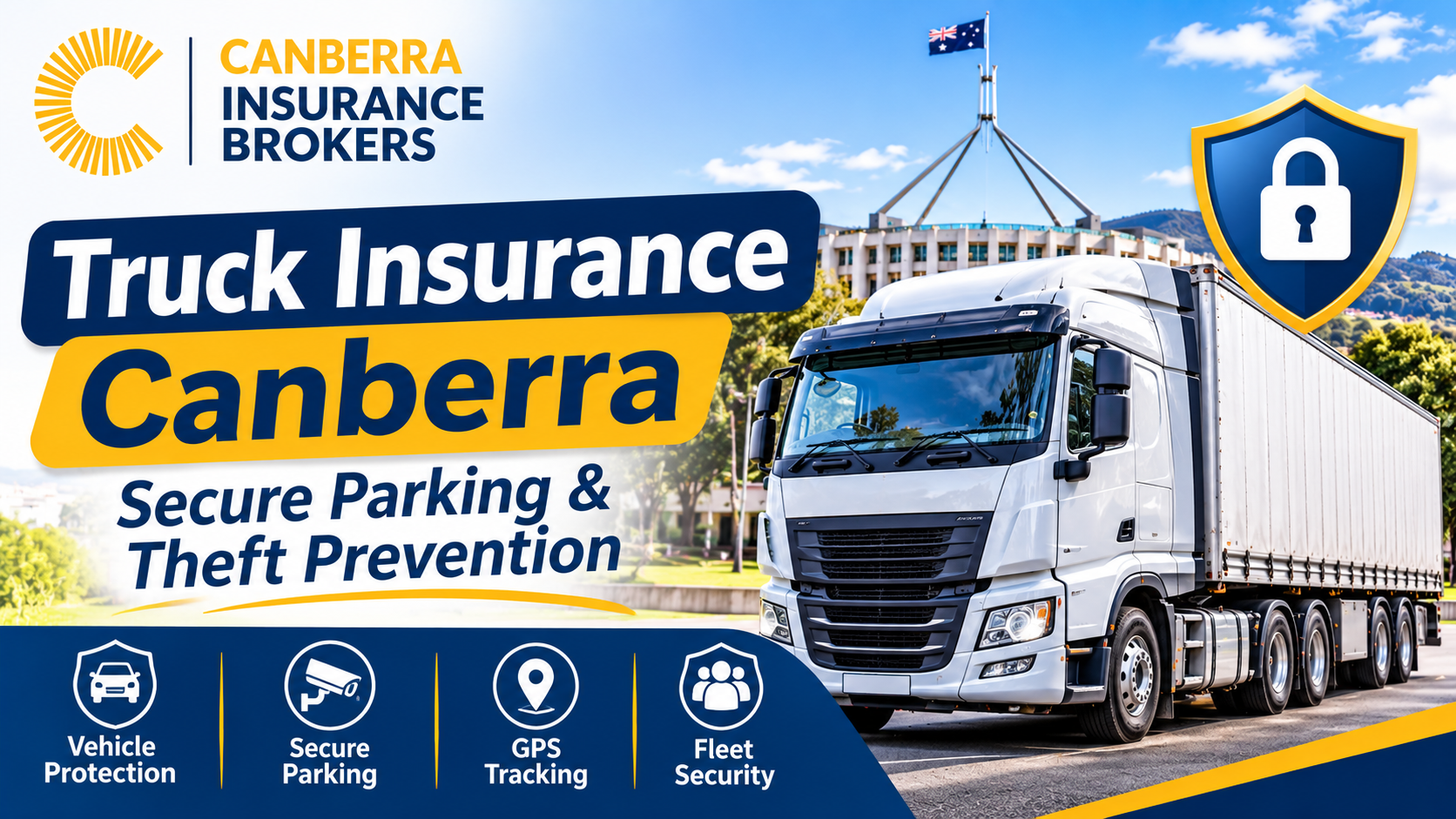
For transport businesses, a commercial truck is more than a vehicle. It is a valuable business asset that carries goods, supports customer contracts and generates income. Unfortunately, theft, unauthorised access and security incidents can disrupt operations and create significant financial pressure.
A truck may be parked overnight at a depot, left temporarily at a delivery location or stopped at a roadside rest area during a long journey. Each situation creates different security considerations, particularly when the vehicle carries valuable cargo, expensive equipment or specialised fittings.
For businesses operating in Canberra and surrounding areas, the right truck insurance should be supported by sensible vehicle security, secure parking arrangements and a clear understanding of policy conditions. Comprehensive truck insurance may provide protection against theft and other insured events, but the actual cover depends on the policy, declared vehicle details, exclusions and security requirements.
Whether you operate one commercial truck or manage a transport fleet, understanding these risks can help you protect your vehicles and keep your business operating.
This guide explains how to improve truck security, reduce theft opportunities, understand insurance conditions and prepare your transport business for unexpected incidents.
Why Truck Security Matters for Canberra Transport Businesses
Canberra's transport industry supports construction, retail, food distribution, manufacturing, warehousing and commercial deliveries. Trucks regularly move goods between industrial areas, customer premises and interstate destinations.
For many businesses, their vehicles represent a considerable financial investment.
A truck stolen from a depot or damaged during an attempted theft can lead to several problems:
- Loss of a valuable commercial vehicle.
- Delays in scheduled deliveries.
- Missed customer commitments.
- Additional vehicle recovery and replacement expenses.
- Damage to transported goods.
- Disruption to normal business operations.
Consider a transport operator based in Fyshwick that leaves two trucks at its depot overnight. One morning, the owner discovers that a vehicle has disappeared and the remaining truck has been damaged.
The immediate concern is recovering the missing vehicle and reporting the incident. However, the business must also consider customer deliveries, replacement transport and the information required by its insurer.
This illustrates why truck insurance should be considered alongside a practical security plan.
The Australian Government's National Security guidance specifically recommends that trucking businesses lock their vehicles, protect their keys, know where vehicles are and understand who has access to them. <Cite refs={["turn534299view1","turn852610view0"]}/>
1. What Does Truck Insurance Cover When a Vehicle Is Stolen?
Commercial truck insurance can provide different levels of protection depending on the policy selected.
Comprehensive truck insurance may cover insured events such as accidental damage, fire, theft and vandalism, subject to the applicable terms and exclusions.
Third-party property damage insurance is different. It generally addresses specified liability for damage caused to another person's property, not the theft or physical damage of your own truck.
This distinction is important when comparing truck insurance in Canberra.
Comprehensive Truck Insurance
If a truck is stolen, comprehensive motor insurance may respond to the loss, subject to the policy conditions.
The insurer will generally need information about:
- The insured vehicle and its registration.
- The date and location of the theft.
- The circumstances surrounding the incident.
- Whether keys and security devices were properly managed.
- Any police report or incident reference.
- Relevant photographs, tracking information and ownership records.
The insurer assesses the claim against the actual policy wording.
Do not assume every policy treats theft in the same way. Some policies contain specific conditions about unattended vehicles, keys, alarms, immobilisers and storage arrangements.
Third-Party Property Damage Insurance
Businesses that choose a more limited motor insurance option should understand that it may not provide protection for theft or accidental damage to their own truck.
For an owner-driver who relies on a single vehicle to earn an income, the financial consequences of losing the truck can be substantial.
Before choosing between comprehensive and more limited protection, consider the replacement cost, outstanding finance, business commitments and your ability to manage an uninsured loss.
2. Secure Overnight Truck Parking: Protecting Your Vehicle When Work Stops
A commercial truck can spend many hours parked between deliveries, particularly when drivers operate across Canberra, regional NSW and interstate freight routes.
The location and security of overnight parking deserve attention when reviewing commercial motor insurance.
A vehicle parked inside a controlled-access depot may have different security arrangements from one parked on an open commercial property or an unfamiliar roadside location.
What Makes a Better Truck Parking Location?
For transport businesses operating in Canberra, consider the following security measures.
Controlled access: Use parking locations where entry is restricted to authorised personnel. Gates, access cards and controlled entry procedures can help limit unauthorised access.
Adequate lighting: Well-lit parking areas make it easier to observe vehicles and identify unusual activity.
Security cameras: CCTV can help monitor entry points, parking areas and vehicle movements. Check that cameras cover important areas and that recordings are retained appropriately.
Physical security: Perimeter fencing, secure gates and suitable vehicle parking arrangements can make unauthorised access more difficult.
Vehicle positioning: Park trucks in designated spaces and consider positioning them to reduce unauthorised movement or access to valuable equipment.
Regular checks: A simple inspection routine can help identify missing equipment, signs of interference or damage.
These measures do not guarantee protection against theft, but they form part of a sensible commercial vehicle security strategy.
Parking at Home or on Commercial Premises
Some owner-drivers keep their trucks at home when not working. Others rent a commercial yard or share parking facilities with another business.
When arranging truck insurance, describe the normal overnight parking arrangements accurately.
Tell the insurer whether vehicles are kept at a business depot, a residential property or another location. If the arrangement changes, check whether the insurer needs to be notified.
Do not assume that a security arrangement suitable for one location automatically meets the conditions of another policy.
3. Truck Keys and Access Control: A Small Detail That Can Become a Major Problem
Truck keys are sometimes treated as ordinary operational equipment. However, poor key management can create unnecessary security risks.
A business with several vehicles may have multiple keys, spare sets, remote locking devices and access cards. If these are not properly controlled, it can become difficult to establish who has access to each truck.
Establish a Clear Key Management System
Create a simple procedure covering the issue, storage and return of vehicle keys.
For example:
- Assign each key to a specific vehicle.
- Store spare keys in a secure location.
- Record which driver receives each key.
- Require keys to be returned after a shift where applicable.
- Restrict access to authorised employees.
- Report missing keys or access devices promptly.
- Arrange reprogramming or replacement when necessary.
A business should also make sure that keys are not left inside an unattended truck or in another location that makes unauthorised access easy.
Why Insurance Conditions Matter
Some commercial motor policies contain specific requirements for securing vehicles and protecting keys.
An incident involving an unlocked vehicle or keys left inside may raise questions about compliance with the policy conditions.
AFCA has published motor insurance determinations involving theft claims where key-security conditions were relevant. These examples concern motor vehicle policies rather than establishing a universal rule for every truck policy. They demonstrate why the actual wording of the applicable policy matters. <Cite refs={["turn880831search2","turn880831search3"]}/>
Before arranging insurance, ask your broker to explain any security conditions that could affect a theft claim.
4. GPS Tracking and Modern Truck Security Systems
Modern commercial vehicles can use a combination of electronic and physical security measures.
GPS tracking is particularly useful for transport businesses that need to monitor vehicle locations and coordinate deliveries.
Depending on the equipment, tracking systems may provide:
- Real-time or periodic location information.
- Movement alerts.
- Route history.
- Geofencing notifications.
- Driver activity information.
- Vehicle status monitoring.
For example, a transport company operating between Hume and customer locations around Canberra may use tracking technology to monitor delivery progress.
If a truck moves outside its expected operating area, the system may generate an alert for further investigation.
Immobilisers and Alarm Systems
An immobiliser may help prevent a vehicle from being started without an authorised key or electronic device.
Vehicle alarms can also provide alerts when unauthorised access is detected.
Other possible security options include steering protection devices, additional locking systems and approved tracking technology.
The correct solution depends on the truck's configuration, age, value and normal operating conditions.
Before installing aftermarket security equipment, check whether the insurer needs details about the device or installation.
Remember that GPS tracking and alarm systems are risk-management tools. They do not automatically create additional insurance benefits or guarantee that a theft claim will be accepted.
5. Trailer and Cargo Security: Don't Forget What Your Truck Is Carrying
Truck security is not limited to protecting the vehicle.
A transport operator may be carrying goods worth considerably more than the truck itself.
For example, a delivery vehicle transporting commercial electronics, construction machinery or food products may expose the business to several types of loss if the vehicle or its cargo is stolen.
Protecting Goods in Transit
Commercial motor insurance and goods in transit insurance are different.
Motor insurance is designed around risks involving the insured vehicle. Goods in transit or cargo insurance may protect eligible goods against specified loss or damage while being transported.
A business should review the following:
- The value of goods carried.
- Cargo security arrangements.
- Loading and unloading procedures.
- Overnight storage of transported goods.
- Requirements for unattended vehicles.
- Customer contracts and delivery responsibilities.
- Any exclusions relating to specific cargo types.
Trailer Security
Trailers can also be vulnerable when disconnected from a prime mover or parked separately.
Depending on the policy, owned trailers, non-owned trailers and trailer interchange arrangements may require different cover.
Consider suitable coupling locks, wheel clamps, secure storage and identification records.
Keep the trailer registration, ownership documents and photographs in an organised location.
Canberra Insurance Brokers provides information about truck and trailer insurance, including options for transport businesses and fleet operators.
6. Driver Security Responsibilities During Deliveries
A transport company's security procedures are only effective when drivers understand and follow them.
Drivers may stop at customer premises, loading facilities, service centres and rest locations throughout the day.
Each stop creates an opportunity for vehicle interference if basic precautions are overlooked.
The Australian Government recommends that transport operators know where their vehicles are, understand who has access and maintain suitable reporting procedures during or after jobs. It also recommends vehicle-security awareness and practical familiarisation for new drivers.
See the official Australian National Security truck and vehicle guidance. <Cite refs={["turn534299view1","turn852610view0"]}/>
A Driver Security Checklist
Before leaving a truck unattended, drivers should follow the company's procedures.
- Park in a suitable, permitted location.
- Apply the parking brake.
- Remove the keys and secure them appropriately.
- Lock the cab and close windows.
- Activate the required security devices.
- Check cargo and trailer security.
- Avoid leaving valuable equipment in plain sight.
- Report suspicious activity or possible interference.
For long-distance operators, include security expectations in driver induction and toolbox meetings.
Drivers should also know who to contact if their vehicle is stolen, damaged or involved in a security incident.
7. What Happens If Your Truck Is Stolen in Canberra?
Discovering that a commercial truck has been stolen can be stressful, particularly when customers are waiting for deliveries.
Having a clear incident procedure makes it easier to manage the immediate situation.
Step 1: Report the Theft
Contact ACT Policing or the relevant police service as soon as possible.
Provide the truck's registration, make, model, colour, identifying features and last known location.
Record the police event number and any information about the officer or station handling the report.
Step 2: Notify Your Insurer
Contact your insurer or follow the claims procedure stated in your policy.
Provide the incident details, police reference and any available information about the vehicle's location or suspected theft.
Do not wait unnecessarily before notifying the insurer. Check any relevant policy notification requirements.
Step 3: Preserve Available Evidence
Keep copies of:
- Vehicle registration and ownership documents.
- Purchase or finance records.
- Insurance schedules.
- CCTV recordings.
- GPS tracking information.
- Driver allocation records.
- Spare key records.
- Relevant communications and delivery records.
Do not delete tracking information or security footage before it has been properly preserved.
Step 4: Manage Business Disruption
If the stolen truck was essential to daily operations, assess how deliveries and customer commitments will be handled.
Depending on your circumstances, this may involve hiring a replacement vehicle or arranging alternative transport.
Check the policy before assuming hire costs, lost income or additional operating expenses will be covered.
8. How Truck Security Can Affect Your Insurance Arrangements
Insurers assess commercial vehicle risks based on various factors, including vehicle type, use, value, location and security arrangements.
For a truck owner, details about where the vehicle is stored and how it is secured may be relevant during the underwriting process.
When requesting a truck insurance quote, be prepared to explain:
Vehicle storage: Is the truck parked at a secured depot, open yard, residential address or another location?
Security measures: Does it have an immobiliser, tracking system, alarm or additional locking device?
Vehicle usage: Is it used for local deliveries, construction work or interstate freight?
Cargo: What types of goods does the truck transport?
Driver access: How many drivers are authorised to operate the vehicle?
Previous incidents: Have there been any previous thefts, attempted thefts or relevant insurance claims?
If your normal parking or security arrangements change, ask whether the insurer needs to be notified.
The important point is to provide accurate information. Never claim that a truck has a security device or secure parking arrangement that it does not actually have.
9. Do Different Businesses Need Different Truck Security Arrangements?
Yes. The security needs of a transport business depend on its operations and the assets it carries.
General Freight Companies
General freight operators may use several trucks to transport goods between depots and customer locations.
Their security planning should consider depot access, vehicle tracking, cargo records and driver procedures.
Food Distribution Businesses
A food distributor operating refrigerated trucks should consider both vehicle security and the protection of temperature-sensitive cargo.
A business involved in food transportation may need to review its motor insurance alongside goods in transit protection and applicable equipment cover.
A separate food business insurance policy may also be relevant for operators that prepare, manufacture or sell food.
Automotive Businesses
Automotive workshops may operate tow trucks, recovery vehicles or commercial delivery trucks.
Their security requirements can include vehicle protection, workshop access controls, tools, equipment and customer vehicles.
Automotive business insurance and commercial motor insurance address different exposures, so the business should not assume that one policy covers everything.
Fleet Operators
A company with several trucks should establish consistent security procedures across its vehicles.
A centralised register can record:
- Vehicle identification and registration.
- Assigned drivers.
- Key holders.
- Security equipment.
- Overnight parking locations.
- Tracking device details.
- Maintenance and inspection records.
This provides management with a clearer understanding of fleet security and can help support an organised insurance review.
10. How to Choose the Right Truck Insurance in Canberra
A good truck insurance decision begins with understanding the financial risks associated with your vehicle and the business activities it supports.
When comparing commercial automobile insurance, look beyond the price.
Check the policy's treatment of theft, accidental damage, third-party property damage, trailers, accessories and goods in transit.
Also understand the applicable excess, valuation basis, exclusions and security-related conditions.
A business insurance broker in Canberra can help you compare relevant options and explain differences between insurers.
When discussing your requirements, provide details of your truck, operating area, normal parking location, security systems, drivers and cargo.
This is particularly important if your business operates vehicles across multiple locations or leaves trucks overnight at different depots.
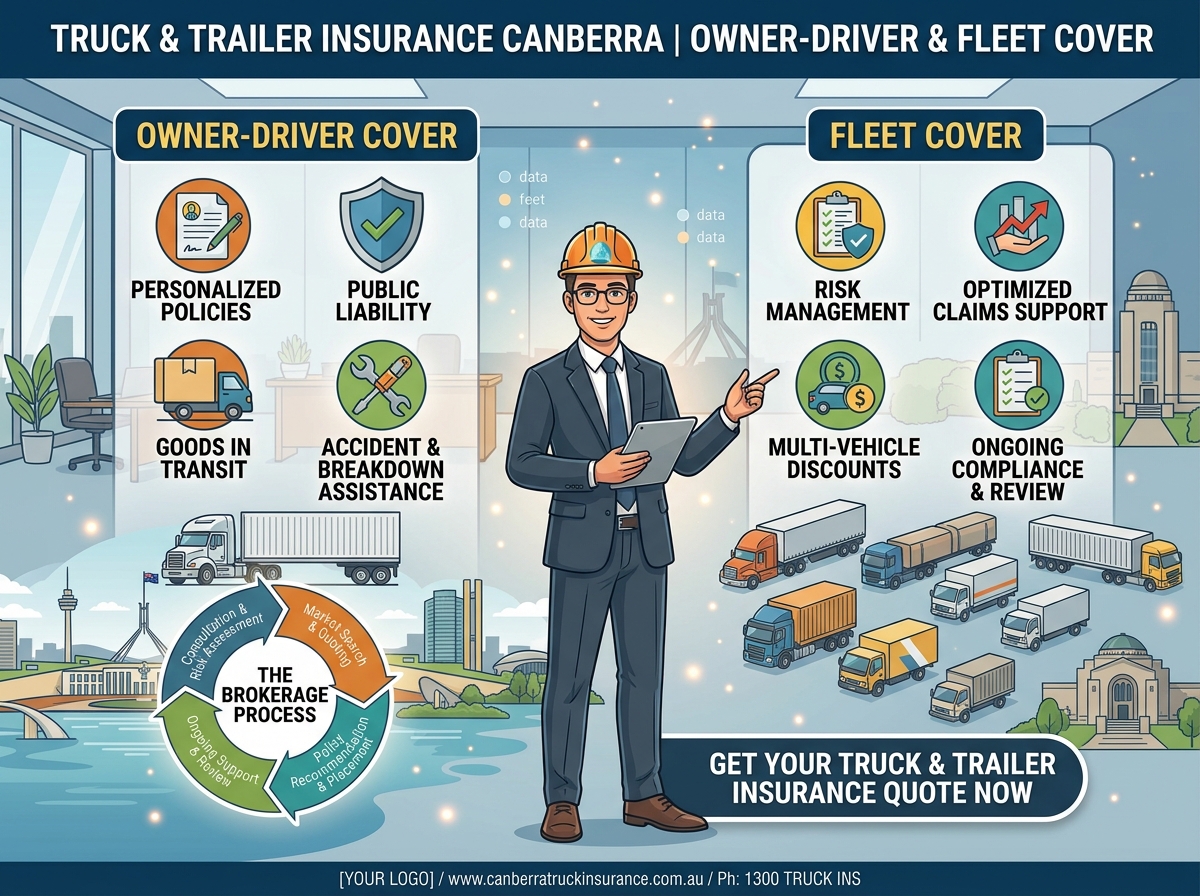
Canberra Insurance Brokers provides truck and transport insurance options for owner-drivers, commercial operators and fleet businesses.
Frequently Asked Questions
Does truck insurance in Canberra cover theft?
Comprehensive truck insurance may cover theft, subject to the policy terms, exclusions, conditions and insured vehicle details. More limited policies may not provide theft protection for your own vehicle.
Does my truck need to be parked in a secure depot?
Not every policy has the same parking requirements. However, secure and permitted parking is an important risk-management measure. Tell your insurer where the truck is normally stored and check any policy conditions regarding overnight parking.
Can an insurer reject a truck theft claim because the vehicle was unlocked?
The answer depends on the specific policy wording and circumstances. Some policies contain requirements concerning locks, keys and security devices. Read your PDS and ask your insurer or broker to explain the relevant conditions.
Is GPS tracking required for truck insurance?
Not universally. Requirements vary by insurer, vehicle and risk assessment. GPS tracking may be requested or recommended for certain vehicles, but it should not be assumed to be a compulsory condition for every truck policy.
Does truck insurance cover stolen cargo?
Not automatically. Commercial motor insurance and goods in transit insurance address different risks. Check whether separate cargo protection is required for the goods you transport.
Are trailers covered under commercial truck insurance?
This depends on the policy and trailer ownership arrangement. Confirm whether owned trailers and non-owned trailers are included and whether separate cover or a specific extension is required.
What should I do if my commercial truck is stolen?
Contact police promptly, notify your insurer under the policy's claims procedure and preserve available evidence such as CCTV recordings, GPS information, vehicle documents and driver records.
How can a Canberra insurance broker help with truck security and cover?
A broker can help you review available policies, explain relevant insurance conditions, discuss security-related information requested by insurers and compare options for trucks, trailers and transport businesses.
Protect Your Trucks and Keep Your Business Moving
A truck is a valuable asset, and its security should be part of everyday transport management.
Simple procedures such as locking vehicles, controlling keys, monitoring access, securing cargo and maintaining accurate driver records can help reduce opportunities for theft and unauthorised use.
However, prevention and insurance work together. Even a well-managed fleet can experience an unexpected incident, which is why it is important to understand what your commercial motor policy actually covers.
Whether you operate one truck, manage a freight fleet or transport goods across Canberra and regional NSW, review your security arrangements alongside your insurance before the next renewal.
Canberra Insurance Brokers helps transport businesses explore commercial truck, trailer and fleet insurance options suited to their operations.
Visit Canberra Insurance Brokers or explore the Truck & Transport Insurance page to discuss your requirements.
Important information: This article provides general information only and does not consider your objectives, financial situation or needs. Insurance benefits, security conditions, exclusions and eligibility requirements vary between insurers and policies. Read the applicable Product Disclosure Statement and policy wording before making an insurance decision.
Author: Canberra Insurance Brokers Editorial Team
Last updated: 12 November 2026












Get in Touch With Us
Have questions about insurance? Our experienced brokers are here to help you find the right coverage.