
Truck Insurance Canberra: How to Protect Your Business When a Truck Is Off the Road
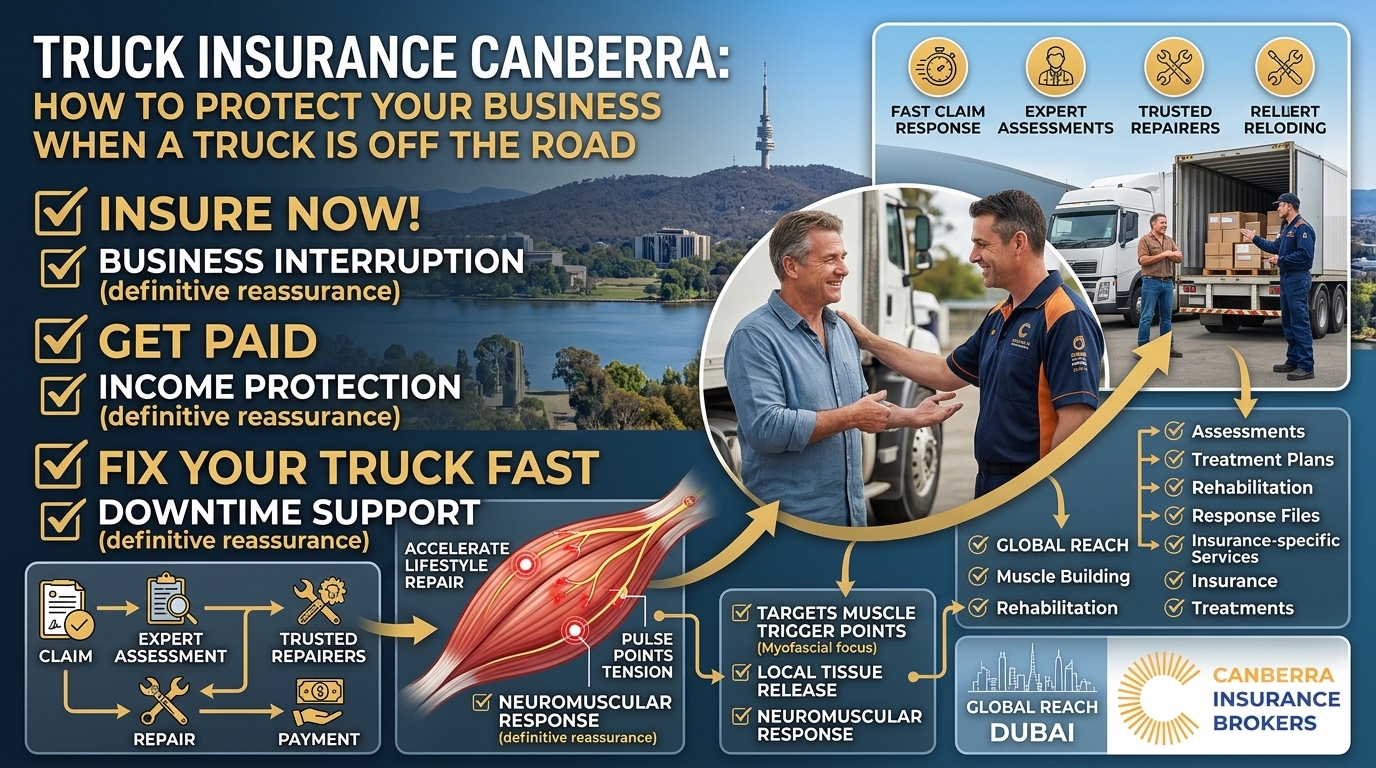
For a transport business, a truck is more than a vehicle. It is the asset that delivers goods, fulfils contracts and generates income. When a truck is involved in an accident, damaged by an insured event or stolen, the financial impact can extend well beyond the cost of repairing or replacing it.
That is why choosing truck insurance in Canberra involves more than comparing premiums. Owner-drivers and fleet operators need to understand how their policy responds to vehicle damage, whether their cargo requires separate insurance, what happens if a trailer is damaged and whether any cover is available for the cost of keeping the business running while a truck is off the road.
The right truck insurance should reflect the vehicle you operate, the work you perform, the goods you carry and the financial consequences of an unexpected interruption. The protection available depends on the insurer, policy wording, selected options, limits, exclusions and conditions.
For transport operators working across Canberra, Queanbeyan and interstate routes, reviewing these details before buying or renewing a policy can help prevent costly misunderstandings.
This guide explains how to assess truck insurance, compare cover beyond the premium and protect the wider operation that depends on your vehicle.
Why Truck Insurance Matters to Canberra Transport Businesses
Canberra's commercial transport activity includes local deliveries, construction materials, equipment movements, furniture removals, refrigerated freight and long-distance transport. Each operation has different requirements.
A rigid truck delivering goods around Fyshwick may have a different risk profile from a tipper working on construction sites or a prime mover travelling between the ACT and other states.
The type of work affects more than the likelihood of an accident. It can influence the vehicle configuration, cargo risks, loading arrangements, operating territory and insurance conditions that need to be considered.
Imagine an owner-driver who uses a truck to complete several scheduled deliveries each week. Following an accident, the vehicle needs repairs and cannot be used for several weeks. Even if the insurer accepts the physical damage claim, the business may still have loan repayments, registration expenses and other commitments.
The owner may also need to arrange another vehicle, manage customer expectations and decide how to fulfil outstanding contracts.
This is why truck insurance needs to be considered as part of a wider business risk plan. The vehicle matters, but so do the cargo, contractual obligations and financial commitments that depend on it.
What Does Truck Insurance in Canberra Cover?
Truck insurance is not one standard product with identical benefits across all insurers. The policy you choose determines what is covered and under what circumstances.
Depending on the product and selected options, commercial truck insurance may address several risks.
1. Accidental Damage to Your Truck
Comprehensive truck insurance may cover accidental damage to the insured vehicle, subject to the policy terms. Covered events may include certain collisions, fire, theft or other specified events.
For a transport operator, repairing a damaged truck can be expensive, particularly when the vehicle has specialised equipment or modifications.
Before choosing a policy, check how the insurer values the vehicle, what excess applies, whether accessories and modifications are included and which circumstances are excluded.
Do not assume that the word comprehensive means every possible loss is covered. The actual policy wording determines the protection available.
2. Third-Party Property Damage
A truck accident can cause damage to another vehicle, building, fence, loading area or other property.
Commercial motor insurance may include third-party property damage cover, depending on the type of policy selected. A policy that only provides limited protection may not cover damage to the insured truck itself.
Consider what would happen if your truck collided with another vehicle while reversing at a delivery site. Your business could face repair costs for its own vehicle as well as a claim involving someone else's property.
When comparing policies, establish whether damage to your own truck and damage to third-party property are covered, and identify the relevant limits and exclusions.
3. Truck Theft and Other Insured Events
A stolen truck can disrupt operations even if the business has alternative transport available. A specialised or heavily equipped vehicle may also take time to replace.
Review whether theft is covered and check the requirements concerning vehicle security, keys, storage and reporting.
If a truck is normally kept at a depot overnight but sometimes parked at an unsecured location, explain those arrangements when applying for cover. Accurate information helps the insurer assess the risk and identify relevant conditions.
4. Trailer Insurance
Transport operators should review the insurance arrangements for trailers as well as prime movers and rigid trucks.
Depending on the policy, separate cover may be needed for owned trailers, trailers attached to an insured truck or certain non-owned trailers used under contractual arrangements.
If your operation uses several trailers, confirm which units are covered and how the policy treats damage while a trailer is attached, detached, parked or being used by another operator.
These details are particularly important for businesses that regularly exchange trailers with other transport companies.
For a broader view of available options, visit Canberra Insurance Brokers' truck and transport insurance page.
Truck Insurance and Business Downtime: What Happens When Work Stops?
One of the most important questions for a truck owner is how the business will operate if the vehicle becomes unavailable.
A standard vehicle damage claim does not automatically replace the income lost while repairs take place. Similarly, cover for a hire vehicle or other additional transport costs should not be assumed unless the policy includes the relevant benefit or extension.
This distinction is important because the financial impact of downtime can continue after the original incident has been dealt with.
Calculate the Cost of an Out-of-Service Truck
Suppose a Canberra delivery operator earns revenue from regular transport contracts. An insured accident takes the truck off the road for three weeks.
During that period, the operator may still have to meet financing payments, business premises expenses, wages and other fixed costs. The business may also lose income or pay another carrier to fulfil deliveries.
A simple planning exercise can help identify the exposure.
Start with the weekly operating costs that continue while the vehicle is unavailable. Add any likely temporary transport or hire costs, then consider the income that may be lost if contracts cannot be fulfilled.
Subtract expenses that genuinely stop during the downtime, and avoid counting the same cost twice.
This is not an insurance claim calculation or a forecast of what an insurer will pay. It is a business planning exercise to help owners understand how much disruption they could manage financially.
Can Truck Insurance Cover a Replacement Vehicle?
Some policies offer optional benefits or extensions that may assist with hire vehicle costs or other expenses after an insured event. Availability, limits, waiting periods and eligibility vary.
Ask the insurer or broker:
- Is a replacement or hire vehicle benefit available?
- Which events trigger the benefit?
- Is there a daily limit or maximum payment period?
- Must the replacement vehicle be approved in advance?
- Are specialised trucks or similar-capacity vehicles included?
- Does the benefit apply if repairs are delayed for reasons outside the insurer's control?
A small delivery van may not be a practical replacement for a refrigerated truck or a heavy vehicle carrying construction materials. Make sure any proposed benefit is assessed against your actual operation.
Business interruption insurance may also be worth discussing, but its triggers and scope differ from motor insurance. Do not assume it will cover every loss of revenue following a vehicle incident.
Goods in Transit: Is Your Cargo Protected?
Truck insurance and goods in transit insurance serve different purposes.
Motor insurance generally addresses specified risks involving the insured vehicle. Goods in transit or cargo insurance may address eligible loss or damage to goods being transported, subject to the terms of the relevant policy.
This distinction matters when a transport operator carries goods belonging to customers.
For example, a truck might be involved in an accident while delivering commercial equipment. The vehicle could suffer damage, and the cargo could also be damaged. Each loss needs to be assessed under the relevant insurance arrangements.
The business may also have contractual responsibilities to its customer. Whether it is legally liable for a particular loss is a separate question from whether an insurance policy responds.
What Should Transport Operators Check?
First, identify the types of goods transported. General freight, refrigerated products, fragile equipment and specialised cargo may present different risks.
Next, review the maximum value of goods carried on a typical trip, the highest value of a load and any requirements imposed by customer contracts.
Check whether the policy covers the relevant goods, journeys and handling activities. Also confirm how loading, unloading, temporary storage, temperature-related losses and unattended vehicles are treated.
If your business transports food or other temperature-sensitive products, explain how refrigeration is maintained and what happens if equipment fails. Cover for spoilage or temperature variation should not be assumed.
Businesses delivering products for a food retailer or restaurant should also understand how their transport insurance interacts with the customer's own insurance arrangements.
Keep consignment notes, delivery records, photographs, invoices and relevant transport documents. These may be required when investigating a loss.
Public Liability Insurance Canberra: Why Truck Operators May Need More Than Motor Cover
Truck insurance addresses risks associated with covered vehicle use, but transport businesses can face other liability exposures.
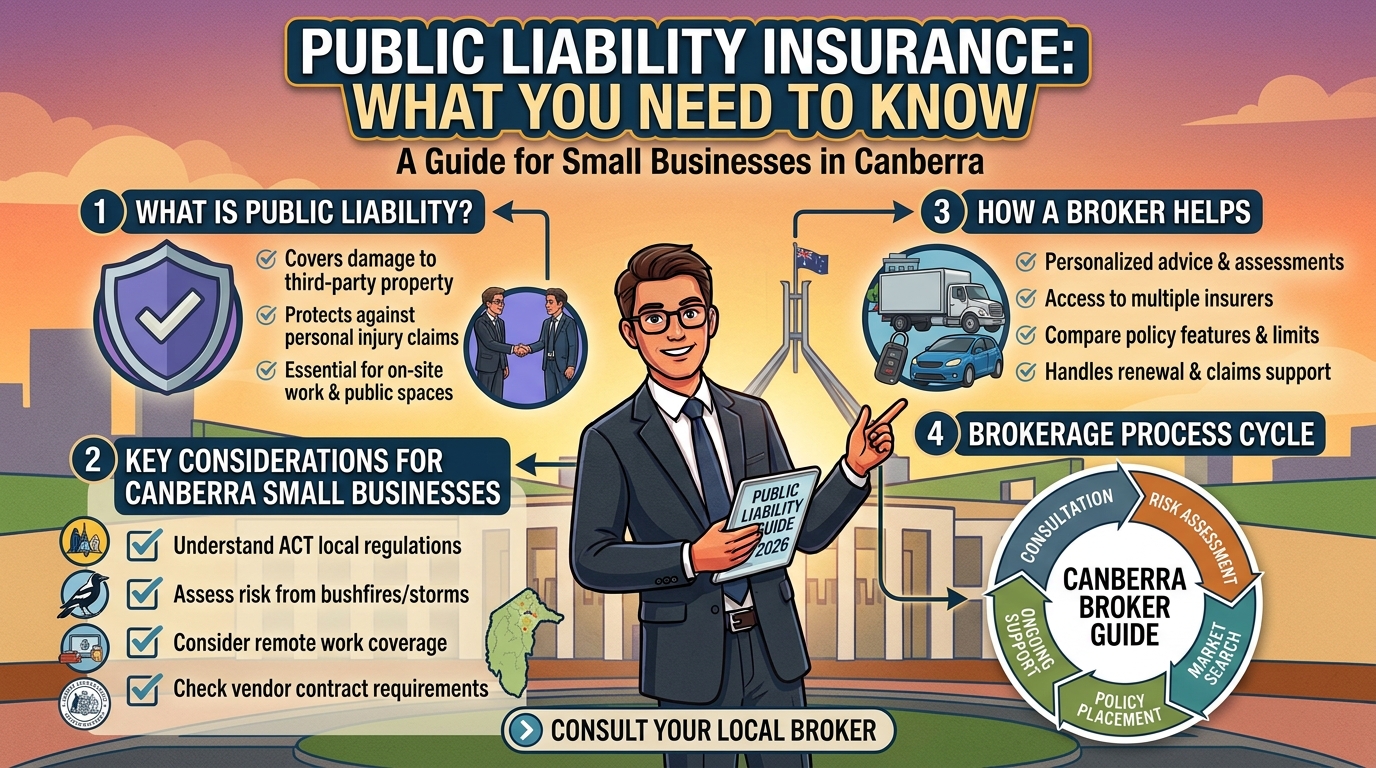
Public liability insurance in Canberra may be relevant to certain claims involving third-party injury or property damage arising from business activities, subject to the policy wording.
Consider a transport operator whose workers unload goods at a customer's premises. An incident during loading or unloading may raise questions about the vehicle policy, public liability arrangements, contractual responsibilities and the specific circumstances.
The policies should not be assumed to provide identical or interchangeable protection.
When reviewing cover, explain the work performed outside ordinary road transport. This could include loading and unloading, operating equipment at delivery sites, moving goods around a warehouse or performing other services for customers.
Ask how the proposed policy treats these activities and whether additional liability protection should be considered.
What About Public Liability and Indemnity Insurance?
Public liability and professional indemnity insurance are intended to address different types of claims.
Public liability generally relates to certain third-party injury or property damage claims connected with business activities. Professional indemnity addresses certain claims alleging financial loss arising from professional advice or services.
A transport operator may have a reason to consider public liability insurance because of loading, unloading or other business activities. Professional indemnity may be relevant if the company also provides specialist consultancy, logistics planning or professional services that create separate exposures.
Not every transport business needs both policies. The appropriate cover depends on what the business actually does, its contracts and the terms offered by insurers.
You can learn more about public liability insurance in Canberra and discuss whether additional business insurance is appropriate.
Commercial Automobile Insurance for Different Truck Operations
A policy should accurately reflect the vehicle's configuration and use. Applying for commercial automobile insurance is not simply a matter of supplying a registration number and choosing a cover level.
The insurer may need information about the truck type, insured value, drivers, cargo, operating area, annual distance travelled, storage arrangements and claims history.
Owner-Drivers
An owner-driver may rely on a single truck for most of their income. If the vehicle cannot operate, there may be limited alternatives.
Consider the insured value, financing arrangements, excess and the cost of a temporary replacement. Also review whether any optional downtime-related benefits are available and suitable.
Owner-drivers should pay particular attention to the practical consequences of an uninsured or excluded loss. A lower premium may not represent good value if the policy leaves the business exposed to a significant financial commitment.
Fleet Operators
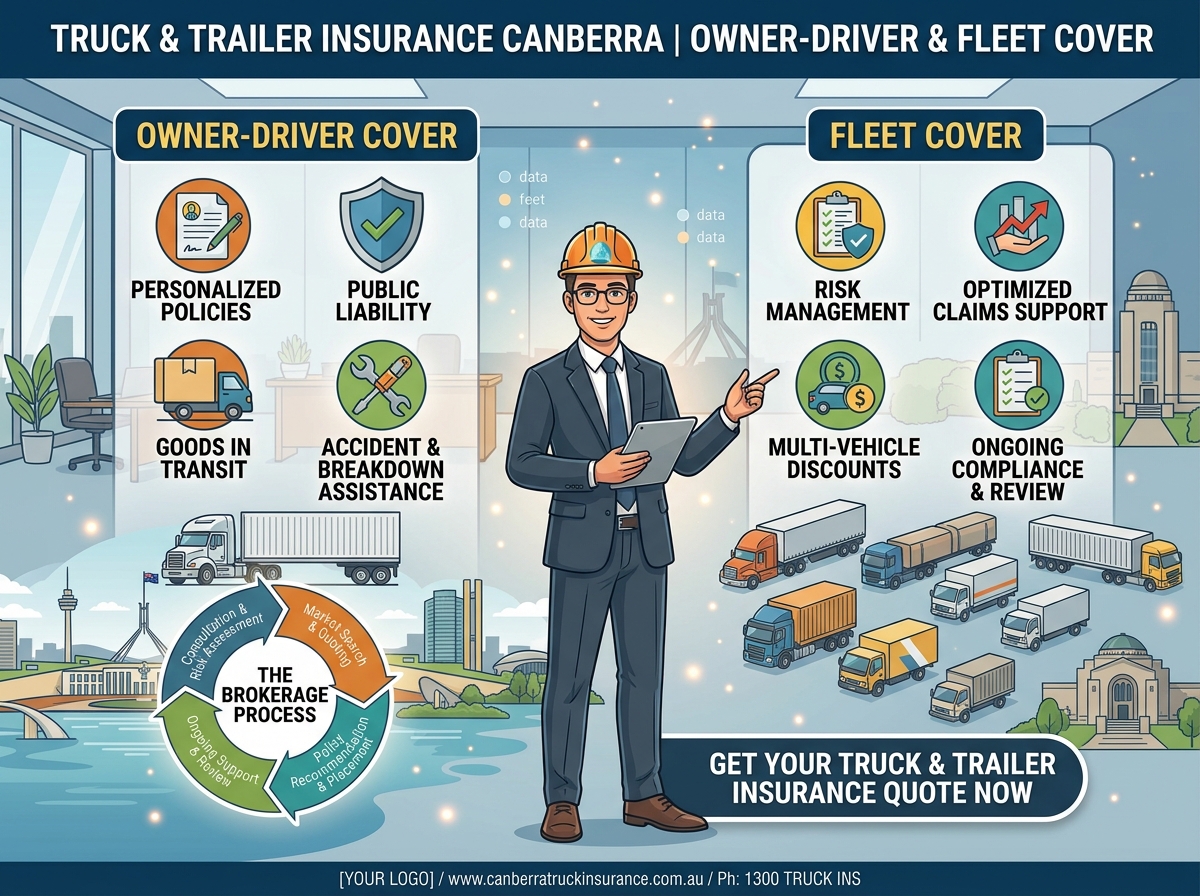
A business operating several vehicles may be able to arrange fleet insurance, depending on the insurer's eligibility requirements.
A coordinated policy can make administration easier, but the business still needs accurate vehicle schedules, driver details and information about how each truck is used.
Review the arrangements when purchasing or selling a vehicle, changing vehicle types or expanding into a new transport activity.
A fleet policy should be evaluated on its terms rather than assumed to be automatically cheaper or more comprehensive than separate policies.
Specialist Trucks
Specialist vehicles can involve requirements beyond those of an ordinary delivery truck.
A refrigerated truck may rely on temperature-control equipment. A tipper may perform work on construction sites. A tow truck may recover disabled vehicles. A prime mover may tow different trailers across state borders.
Tell the insurer about the equipment fitted to the vehicle, modifications, normal loads and working conditions. If the business undertakes new types of work, review the insurance before those activities begin.
Is ACT Motor Accident Injuries Insurance Enough?
No. Compulsory Motor Accident Injuries (MAI) insurance in the ACT provides personal injury protection under the Territory's scheme. It does not cover damage to the insured truck, other vehicles or property; separate motor insurance is needed for those risks. The official ACT Motor Accident Injuries Commission guidance explains this distinction.
The compulsory MAI arrangement is part of vehicle registration. It should not be confused with comprehensive truck insurance, third-party property damage insurance, cargo cover or other commercial insurance.
For a transport business, understanding these differences is essential. A vehicle can meet its registration-related personal injury insurance requirements while still needing separate protection against property damage and business losses.
Confirm the registration and insurance arrangements appropriate to each vehicle, and seek clarification if you are unsure which policy addresses a particular risk.
How Much Does Truck Insurance in Canberra Cost?
There is no single premium that applies to every truck in Canberra. Insurers assess the vehicle and the risks associated with its use before determining available terms and pricing.
Factors that may influence a quote include:
Vehicle type and value: A prime mover, rigid truck and specialist vehicle can have different risk profiles and replacement costs.
Use and operating area: Local deliveries and interstate transport may involve different driving patterns, routes and exposure.
Drivers: The information required about drivers and their experience can vary by insurer.
Cargo: The goods transported and the way they are handled may affect the underwriting assessment.
Claims history: Previous claims may influence how a risk is assessed.
Security and storage: Garaging, parking and security measures may be relevant.
Cover selected: Insured values, limits, excesses and additional benefits affect the overall cost and level of protection.
When requesting a quote, provide accurate details rather than trying to obtain the lowest possible estimate by understating how the truck is used.
A useful comparison considers the premium alongside the excess, exclusions, coverage limits, optional benefits and the way each policy would respond to the risks that matter most to the business.
How to Compare Truck Insurance Quotes Without Overlooking Important Details
Before choosing a policy, compare the options using the same information. If one insurer receives different details from another, the resulting premiums and cover may not be meaningfully comparable.
Use this checklist when reviewing quotes:
- Confirm the insured vehicle. Check the registration, vehicle description, value, accessories and modifications.
- Check the permitted use. Make sure the policy reflects the work performed and the routes travelled.
- Review the excess. Understand the amount payable for relevant claims and whether different excesses apply in different situations.
- Read the exclusions. Identify provisions relating to drivers, cargo, loading and unloading, theft, mechanical breakdown and other relevant risks.
- Check trailers separately. Confirm which trailers are insured and under what circumstances.
- Review optional benefits. Ask about replacement vehicles, downtime-related costs and any conditions that apply.
- Confirm cargo arrangements. Check whether goods in transit insurance is required for your contractual responsibilities.
- Consider liability outside road use. Ask whether separate public liability or other business insurance should be considered.
- Understand claims procedures. Find out how incidents are reported, whether repairs need approval and what evidence must be provided.
The purpose is not to choose the policy with the longest list of features. It is to understand which options are relevant to your business and what financial risks remain.
Why Work With a Canberra Insurance Broker?
Searching for truck insurance online can help you understand the available products, but policy wording and underwriting requirements can be difficult to compare.
A business insurance broker in Canberra can help organise the details of your operation, explain differences between available options and identify questions to resolve before cover is arranged.
A broker may be particularly useful if you operate several trucks, use specialised equipment, carry high-value goods, work interstate or have contracts requiring specific insurance arrangements.
Before requesting quotes, prepare your vehicle information, driver details, operating territory, cargo description, claims history and current policy documents.
Explain any unusual activities, including loading and unloading, refrigerated transport, specialised recovery work or the use of trailers owned by other businesses.
Canberra Insurance Brokers provides information about truck and transport insurance and other business insurance options.
You can also visit the contact page to discuss your transport insurance requirements.
Frequently Asked Questions
What does truck insurance in Canberra cover?
Depending on the policy, truck insurance may cover accidental damage, theft, fire and third-party property damage, along with selected optional benefits. Trailer insurance, cargo protection and other liability covers may need to be arranged separately. Always check the policy wording.
Does truck insurance cover goods in transit?
Not automatically. Goods in transit or cargo insurance addresses risks relating to transported goods, subject to the applicable terms. Truck motor insurance and cargo insurance should be assessed separately.
Can truck insurance cover a replacement vehicle?
Some products offer hire vehicle or other benefits following an insured event. Conditions, limits and availability vary. Ask whether a suitable replacement vehicle would be available for the type of truck you operate.
How much does truck insurance cost in Canberra?
The premium depends on factors such as the truck's value, type, use, operating area, drivers, cargo, claims history, excess and cover selected. An insurer or broker needs accurate details to obtain a meaningful quote.
Is MAI insurance the same as comprehensive truck insurance?
No. ACT MAI insurance provides compulsory personal injury protection associated with vehicle registration. Comprehensive or third-party property insurance is separate and addresses specified vehicle or property damage risks.
Can one insurance policy cover multiple trucks?
Fleet insurance may be available for businesses with multiple vehicles, subject to the insurer's requirements. The business should confirm which vehicles, drivers, uses and trailer arrangements are included.
Do I need public liability insurance as well as truck insurance?
It depends on your business activities and contractual obligations. Motor insurance and public liability insurance address different exposures. Operators who undertake loading, unloading or other work away from the road should review whether additional liability cover is appropriate.
Protect the Truck That Keeps Your Business Moving
The right insurance decision starts with an honest assessment of what your transport operation does and what a serious disruption could cost.
For some Canberra operators, the main priority is protecting a high-value truck. For others, cargo, trailer arrangements, replacement transport and liability exposure may be equally important. A single owner-driver and a large fleet can have very different requirements.
Review your existing policy before renewal, check whether vehicle use and insured values are accurate, and understand which risks require separate cover. Pay attention to exclusions and optional benefits rather than comparing premiums alone.
Canberra Insurance Brokers helps transport businesses explore truck, trailer and commercial vehicle insurance options suited to their operations.
Visit Canberra Insurance Brokers to learn more or use the contact page to discuss a quote.
Important information: This article is general information only and does not take account of your objectives, financial situation or needs. Policy terms, eligibility, premiums, limits, exclusions and benefits vary between insurers. Read the applicable Product Disclosure Statement and policy wording, and consider whether the cover is appropriate for your circumstances before making a decision.
Author: Canberra Insurance Brokers Editorial Team
Last updated: 29 October 2026












Get in Touch With Us
Have questions about insurance? Our experienced brokers are here to help you find the right coverage.