
Truck Insurance Canberra for Specialist Work Trucks: Are Your Attachments and Equipment Covered?
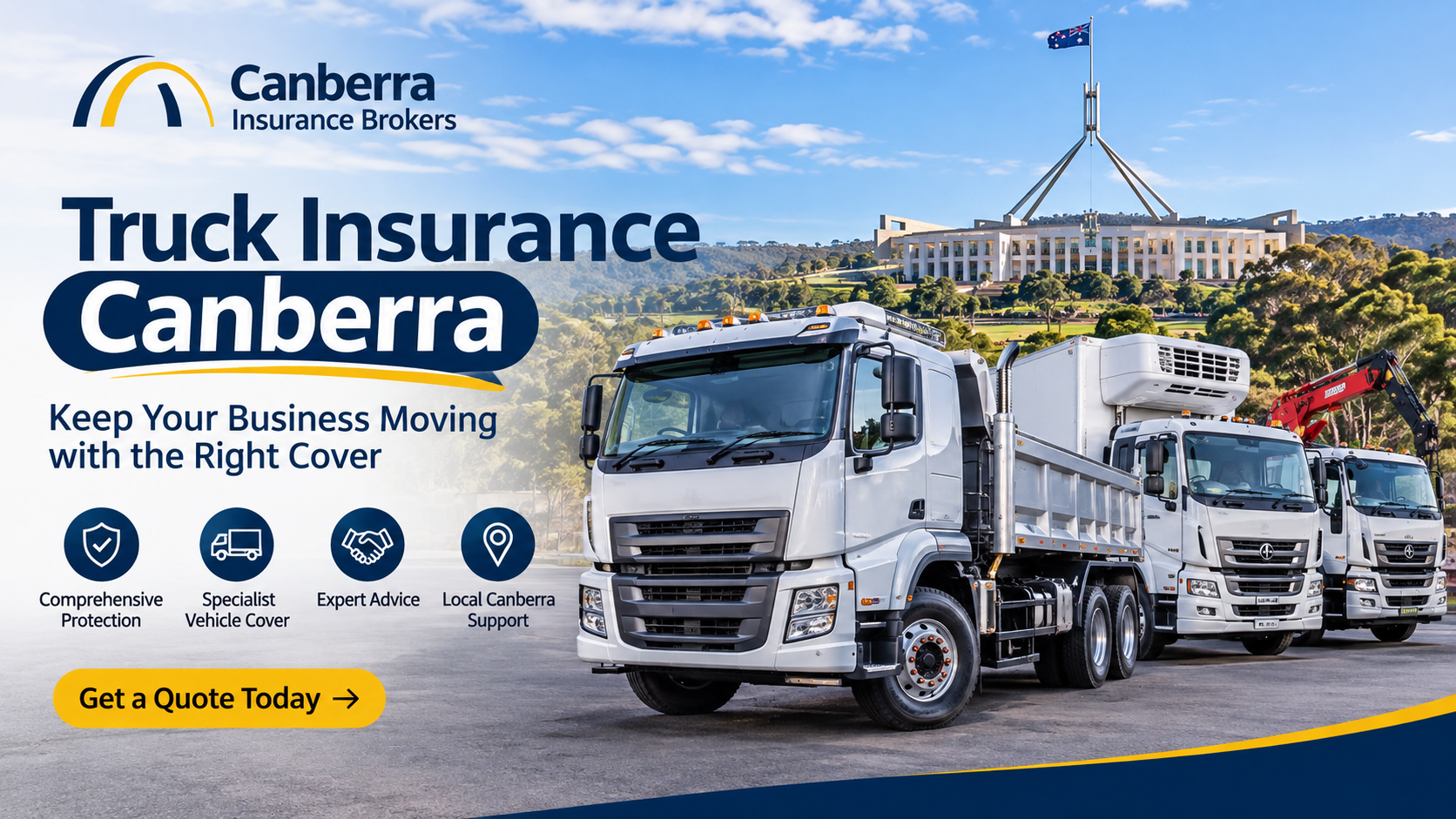
A truck used for specialist work is more than a commercial vehicle. It may carry expensive machinery, operate hydraulic equipment, lift heavy materials, transport temperature-sensitive goods or perform work at construction sites. When the vehicle is damaged, the financial loss may involve more than the truck itself.
For businesses in Canberra, choosing the right truck insurance means looking at the complete vehicle setup, including its body, fitted equipment, modifications and the work it performs. A tipper truck, crane truck, refrigerated vehicle and tilt tray can all have different insurance considerations.
Standard commercial motor insurance should not automatically be assumed to cover every attachment, specialist machine or item of equipment fitted to a truck. The insurer needs accurate information about the vehicle and its configuration, and the policy wording must be checked to establish what is covered.
Whether you operate one specialist truck or manage a fleet across Canberra and surrounding NSW locations, reviewing these details before arranging insurance can help reduce the risk of unexpected gaps.
This guide explains what Canberra truck owners should consider when insuring specialised vehicles, how fitted equipment should be declared and which additional insurance arrangements may be relevant to the business.
Why Specialist Trucks Need a Different Insurance Review
A standard delivery truck and a specialised work truck may have similar chassis and engine components, but the equipment fitted to them can make their insurance requirements very different.
For example, a construction business might use a tipper truck to transport gravel and remove building waste. A separate truck may have a hydraulic crane for lifting materials at customer sites. Another business might operate refrigerated trucks to deliver products that must remain at controlled temperatures.
Each vehicle performs a different job and can involve different risks.
Consider a business operating in Fyshwick that purchases a second-hand truck and spends additional money installing a hydraulic lifting system. The owner arranges insurance based on the truck's original purchase details but does not provide accurate information about the additional equipment.
The business may then discover that the equipment's value, use or insurance treatment was not properly reflected in the policy.
This illustrates why the insurance discussion should include the complete vehicle, rather than focusing only on its registration, make and model.
A specialist truck insurance review should consider:
- The original truck and its current value.
- The fitted body and specialist equipment.
- Hydraulic, electrical and mechanical systems.
- Aftermarket accessories and modifications.
- The type of work performed at customer premises.
- The goods or materials being transported.
- The operating area and vehicle usage.
- Whether additional machinery or liability insurance is required.
The Australian Government's transport industry business guide identifies vehicles, equipment and machinery, cargo, property and business interruption as separate insurance considerations for transport businesses.
That distinction is particularly important for operators of specialised trucks.
1. Tipper Truck Insurance: Protecting the Vehicle and Hydraulic Equipment
Tipper trucks are commonly used by construction businesses, landscaping contractors, civil works operators and material transport companies.
They are designed to transport and unload materials such as soil, gravel, sand, construction waste and other bulk products.
However, the tipping mechanism is an important part of the vehicle's working value.
Depending on the configuration, a tipper may include:
- A specialised tipping body.
- Hydraulic cylinders and lifting mechanisms.
- Power take-off (PTO) systems.
- Hydraulic pumps and control equipment.
- Tailgates and specialist locking systems.
- Tarpaulin or automated load-cover systems.
When arranging truck insurance in Canberra, explain which components are factory-fitted and which were added or upgraded later.
What Happens If the Tipping System Is Damaged?
Imagine a tipper truck operating at a construction site in Canberra. During unloading, the truck's tipping body or hydraulic equipment suffers damage.
There may be two separate financial concerns: damage to the vehicle and damage to the specialist equipment.
Whether both are insured under the same policy depends on the insured vehicle description, declared value, selected cover and exclusions.
Mechanical or electrical breakdown is also different from accidental damage. A policy covering accidental damage should not automatically be assumed to cover every hydraulic failure or maintenance-related problem.
Ask the insurer:
- Is the tipping body included in the insured vehicle value?
- Are hydraulic systems and PTO components covered?
- How are aftermarket upgrades treated?
- Is mechanical breakdown excluded or available through another product?
- Does the cover apply while the truck is operating at construction sites?
These questions help establish whether the proposed arrangement reflects the actual equipment used by the business.
2. Crane Truck and Hiab Insurance in Canberra
Truck-mounted cranes are used in construction, building supplies, equipment transport and materials handling.
A crane truck may transport goods from a warehouse and then lift those materials directly onto a job site. This means the vehicle performs two functions: transportation and lifting.
The fitted crane is a valuable piece of equipment, so its insurance treatment deserves particular attention.
What Should Crane Truck Owners Declare?
When requesting insurance, provide details about:
- Crane make and model.
- Rated lifting capacity.
- Installation and modification details.
- The crane's declared value.
- Any additional lifting attachments.
- The way the crane is operated.
- Whether lifting work is performed at customer premises.
A truck-mounted crane may have different components and accessories, including hydraulic systems, stabilisers, outriggers and lifting attachments.
Do not assume that all these components are automatically included simply because the truck itself is insured.
Insurance for Lifting Operations
There is also an important distinction between damage to the crane truck and liability arising from lifting work.
For example, a crane truck operator may be lifting building materials at a construction site. If an incident causes damage to another person's property, the relevant insurance arrangements need to be reviewed.
Commercial motor insurance and public liability insurance address different risks. The appropriate policy response depends on where the incident happens, the activity being performed and the policy wording.
A business that regularly provides lifting services should explain those activities when discussing cover with its broker.
It should also maintain suitable operating procedures, equipment inspections and lifting records. Insurance is not a replacement for safe work practices or compliance with applicable workplace and heavy vehicle requirements.
3. Refrigerated Truck Insurance and Cold-Chain Equipment
Refrigerated trucks play an important role in transporting food, beverages, pharmaceuticals and other temperature-sensitive goods.
Unlike a standard freight truck, a refrigerated vehicle relies on additional equipment to maintain the required cargo temperature.
This may include:
- Refrigeration units.
- Insulated bodies.
- Temperature monitoring equipment.
- Backup systems.
- Specialist electrical installations.
- Temperature recording devices.
For businesses operating refrigerated transport in Canberra, it is important to review the truck and refrigeration equipment separately when arranging insurance.
What If the Refrigeration Unit Stops Working?
Imagine a refrigerated truck carrying food products from a supplier to a commercial customer. The refrigeration system experiences a fault during the journey.
The business may face several different losses:
- Damage to the refrigeration equipment.
- Loss or deterioration of the transported goods.
- Additional delivery or recovery expenses.
- A dispute about responsibility for the damaged cargo.
These losses are not necessarily covered by one policy.
Commercial motor insurance, machinery breakdown cover and goods in transit insurance each have different purposes. The relevant policy wording determines whether the particular incident is insured.
For refrigerated transport operators, ask whether the proposed arrangements address refrigeration equipment, temperature-related stock losses and cargo deterioration following an insured event.
Keep Temperature and Maintenance Records
Good records can help demonstrate how the refrigeration system was maintained and how the vehicle operated.
Consider keeping:
- Refrigeration servicing records.
- Temperature monitoring logs.
- Equipment installation invoices.
- Maintenance reports.
- Cargo descriptions and delivery records.
- Incident and alarm reports.
These records are useful for managing the operation and may also support an insurance claim where relevant.
4. Tilt Tray and Tow Truck Insurance
Tilt tray and tow trucks perform specialised work that involves moving, loading and recovering other vehicles or equipment.
A tilt tray might transport machinery, cars, commercial vehicles or construction equipment. A tow truck may recover vehicles following breakdowns or accidents.
In addition to the truck itself, operators may need to consider the value and use of specialised equipment.
This may include:
- Hydraulic tilt trays.
- Winches and cables.
- Wheel-lifting equipment.
- Recovery attachments.
- Loading ramps.
- Hydraulic controls.
- Safety and securing equipment.
Damage During Loading and Recovery
An incident may occur while a vehicle is being loaded, secured or recovered, even when the truck is not travelling on a public road.
For example, a tilt tray operator is loading a customer's vehicle at a roadside location. During the operation, the customer's vehicle is accidentally damaged.
The business may face a claim involving property in its care or control. The policy needs to be checked carefully to establish how customer vehicles and loading activities are treated.
Do not assume that a standard truck motor policy automatically provides protection for every vehicle being recovered or transported.
Discuss the actual work with the insurer, especially if the business regularly handles customers' vehicles or operates at accident scenes.
5. Concrete Pump Trucks and Other Specialist Commercial Vehicles
Some commercial trucks are effectively mobile work platforms or machinery units.
Concrete pump trucks, vacuum trucks, sewerage trucks, waste collection vehicles and specialised service trucks can have equipment that represents a substantial part of their total value.
For example, a concrete pump truck may have a truck chassis, a specialised pump, hydraulic components, a boom and associated controls.
A vacuum truck may have tanks, pumps, hoses and specialist waste-handling equipment.
When reviewing insurance, consider whether the vehicle and specialist machinery are treated as one insured asset or whether additional cover is appropriate.
Separate Vehicle Damage From Equipment Breakdown
There is a difference between accidental damage to a truck and internal failure of specialist machinery.
An accident that damages a vehicle-mounted pump may be treated differently from an internal mechanical breakdown caused by wear or another excluded cause.
The same principle can apply to hydraulic equipment, vacuum systems, refrigeration units and specialised lifting machinery.
Ask whether equipment breakdown protection is available and whether it applies to the actual machinery installed on the truck.
If the business relies heavily on specialised equipment, a broker can help identify whether a separate machinery or equipment insurance policy should be considered.
6. Truck Modifications: Why You Should Tell Your Insurer
Commercial trucks are frequently modified to meet specific operating requirements.
A business might install a crane, upgrade a tipping body, add a tail lift, change the vehicle's configuration or fit specialist refrigeration equipment.
While these upgrades may make the vehicle more useful, they can also change its value, weight, function and risk profile.
Do All Modifications Require Approval?
No. Requirements depend on the nature of the modification and the applicable heavy vehicle standards.
The National Heavy Vehicle Regulator provides guidance on vehicle modifications, including minor, common and complex modifications. Some modifications may require approval or certification by an Approved Vehicle Examiner or the NHVR.
For current information, refer to the NHVR Heavy Vehicle Modifications guidance.
It is important to understand that vehicle compliance and insurance are separate matters.
A modification may satisfy the relevant vehicle standards but still need to be disclosed to the insurer. Likewise, arranging insurance does not make an unapproved vehicle modification lawful.
What Should You Tell the Broker?
Before or immediately after a significant upgrade, provide details of the modification, including its purpose, installation cost, equipment specifications and any required certification.
Ask whether the modification changes the insured vehicle value or requires the insurer to update the vehicle schedule.
Keep copies of:
- Equipment invoices.
- Installation documents.
- Engineering reports, where relevant.
- Modification certificates.
- Photographs of the completed installation.
- Updated vehicle valuation information.
This is particularly important for older trucks that have undergone several upgrades over their working life.
7. Does Truck Insurance Cover Tools and Additional Equipment?
A specialist truck may carry valuable tools and portable equipment in addition to its permanent fittings.
For example, a construction operator might carry chains, lifting accessories, power tools and specialist site equipment.
A tow truck may carry recovery tools, while a refrigeration business may transport additional monitoring or maintenance equipment.
The truck's motor policy should not automatically be assumed to cover every item stored inside or attached to the vehicle.
Different insurance arrangements may be relevant:
Commercial motor insurance: For insured damage to the truck and specified accessories, subject to the policy.
Tools and equipment insurance: May provide protection for eligible tools or portable equipment.
Machinery insurance: May be relevant to specialist machinery and equipment.
Goods in transit insurance: May address eligible loss or damage to goods being transported.
The Australian Government's business insurance guidance provides an overview of these different insurance categories.
When requesting a quote, prepare a list of the equipment carried and identify which items are permanently fitted, which are removable and which belong to customers.
8. Public Liability Insurance for Specialist Truck Operators
A specialist truck may perform work at locations beyond ordinary road transport.
A crane truck might operate at construction premises, a tipper may work on building sites, and a tow truck may recover vehicles from private property.
These activities can create liability exposures that should be reviewed separately from motor insurance.
Public liability insurance may respond to certain claims involving third-party injury or property damage arising from business activities, subject to the policy wording.
For example, a contractor operating machinery at a client's premises may face an allegation that its work caused property damage.
The exact response depends on the circumstances, insured activities, exclusions and relevant policy terms.
Businesses should explain all relevant activities, including lifting, loading, unloading and work performed on private or commercial sites.
A business that also provides specialist professional advice or consulting services may need to consider professional indemnity separately. Public liability and professional indemnity are not interchangeable policies.
9. How to Calculate the Value of a Specialist Truck
The value of a specialist truck is not always represented by the price of the original vehicle.
A truck purchased for general commercial work might later receive several expensive upgrades.
For example:
ComponentInformation to recordTruck chassisMake, model, year and valueSpecialist bodyTipper, refrigerated body or other fit-outMounted machineryCrane, pump or lifting systemHydraulic equipmentPumps, cylinders and controlsElectrical equipmentAdditional power systems and controlsAccessoriesWinches, tail lifts and specialised fittings
This is an illustrative asset checklist, not an insurance valuation.
Depending on the policy, the insurer may use market value, agreed value or another specified basis. The important point is to understand how the vehicle and its equipment will be valued following an insured loss.
If replacement would require specialised installation or engineering work, discuss those costs when reviewing the insured value.
Do not assume every upgrade automatically increases the sum insured. Confirm the correct treatment with the insurer.
10. What Information Should You Prepare Before Requesting Truck Insurance?
Having accurate information available can make the quotation process more straightforward.
For a specialist truck, prepare the following details.
Vehicle information
- Make, model and year.
- Registration details.
- Vehicle identification information.
- Current value.
- Vehicle type and intended use.
Specialist equipment
- Type of fitted machinery.
- Manufacturer and model.
- Equipment value.
- Installation details.
- Modification and certification documents, where applicable.
Business operations
- Main services provided.
- Operating area around Canberra and interstate, where applicable.
- Typical work locations.
- Cargo or materials transported.
- Loading, unloading and lifting activities.
Drivers and security
- Driver details and applicable restrictions.
- Overnight storage arrangements.
- Vehicle security measures.
- Previous claims and relevant insurance history.
Existing insurance
- Current commercial motor policy.
- Existing equipment insurance.
- Liability protection.
- Relevant policy schedules and limits.
A business insurance broker in Canberra can use this information to help compare available options and identify details that need to be clarified with insurers.
11. Choosing the Right Truck Insurance Broker in Canberra
Specialist truck insurance requires more than identifying a vehicle and selecting a premium.
A useful insurance review should consider how the truck operates, what equipment is fitted and whether the vehicle performs work beyond ordinary transportation.
When speaking with a Canberra insurance broker, explain the full setup rather than simply describing the vehicle as a commercial truck.
Ask the broker to clarify:
- How permanent attachments are treated under the motor policy.
- Whether specialist machinery needs separate protection.
- How aftermarket modifications affect the insured value.
- Whether mechanical and electrical breakdown are covered.
- How customer property and third-party liability are addressed.
- Whether the policy matches the actual work locations and vehicle use.
Compare premiums alongside exclusions, excesses, limits and the insurer's claims requirements.
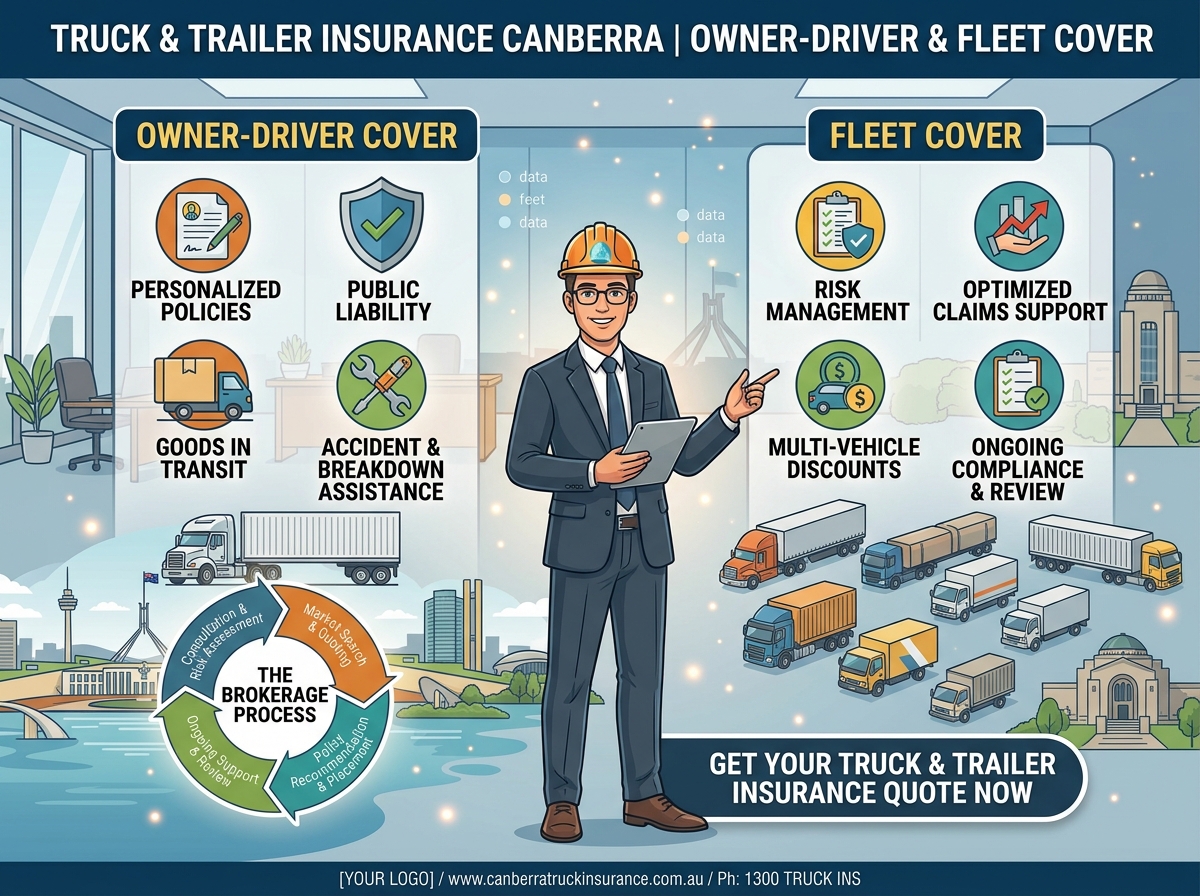
Canberra Insurance Brokers provides truck and transport insurance options for owner-drivers, fleet operators and commercial vehicle businesses.
Frequently Asked Questions
Does truck insurance in Canberra cover a truck-mounted crane?
It depends on the policy. Some arrangements may include specified fitted equipment, while other machinery or attachments may need to be separately declared or insured. Confirm the treatment of the crane, its accessories and installed hydraulic systems.
Is a tipper body included in truck insurance?
Do not assume that every tipper body and hydraulic component is automatically covered. Confirm that the vehicle description and insured value reflect the body, tipping mechanism and relevant fittings.
Does comprehensive truck insurance cover mechanical breakdown?
Not necessarily. Accidental damage and mechanical breakdown are different risks. Mechanical or electrical breakdown may be excluded or require a separate policy or extension.
Does truck insurance cover refrigeration equipment?
The treatment of refrigeration units depends on the policy and how the equipment is insured. Ask about both accidental damage to the unit and equipment breakdown, as these may be treated differently.
Should I tell my insurer when I modify my truck?
Yes. Inform the insurer about significant modifications and equipment installations, and confirm whether the vehicle schedule and insured value need updating. Also check whether the modification requires approval under applicable heavy vehicle standards.
Can one policy cover the truck and its attachments?
This depends on the insurer and policy structure. Some fitted equipment may be included within the insured vehicle description, while separate machinery or equipment protection may be necessary for other assets.
Do specialist truck operators need public liability insurance?
It depends on their activities and contractual responsibilities. Operators undertaking lifting, loading, unloading or other work at customer premises should review their public liability exposure and confirm whether suitable protection is in place.
How do I get a truck insurance quote in Canberra?
Prepare the vehicle details, equipment list, modification documents, business activities, operating area, driver information and claims history. A broker can use these details to help compare available insurance options.
Get the Right Insurance for Your Specialist Truck
A specialist work truck represents a considerable investment. Its value may include the chassis, body, attachments, hydraulic systems, machinery and other equipment that make the vehicle useful to the business.
Whether you operate a tipper in construction, a crane truck for materials handling, a refrigerated vehicle for commercial deliveries or a tilt tray for vehicle recovery, make sure the insurance discussion reflects the complete operation.
Review the equipment fitted to your truck, keep modification and installation documents, check how the insurer values the vehicle and ask whether additional machinery, tools or liability insurance is appropriate.
Canberra Insurance Brokers helps businesses explore truck, trailer and transport insurance options suited to their operations.
Visit Canberra Insurance Brokers or view the Truck & Transport Insurance page to discuss your requirements.
Important information: This article provides general information only and does not consider your objectives, financial situation or needs. Insurance availability, limits, exclusions, equipment definitions and conditions differ between insurers. Always read the relevant Product Disclosure Statement and policy wording, and confirm the treatment of specialist equipment before arranging cover.
Author: Canberra Insurance Brokers Editorial Team
Last updated: 4 November 2026













Get in Touch With Us
Have questions about insurance? Our experienced brokers are here to help you find the right coverage.